If going to the dentist fills you with dread, you’re in much better company than you might think. Dental anxiety affects roughly one in six Australian adults — and research suggests the real number may be higher, since many people simply avoid going and never show up in the statistics at all.
If that’s you, this post is for you.
You’re not alone, and there’s nothing to be embarrassed about
Dental anxiety isn’t a character flaw or an overreaction. It’s a genuine and very common response that can range from mild nervousness before appointments to significant fear that leads people to avoid dental care altogether, sometimes for years.
At Smile Spot Mawson Lakes, we see nervous patients regularly. Some come in after a long gap and feel embarrassed about the state of their teeth. Some had a difficult experience at the dentist as a child and have avoided it ever since. Some simply can’t identify where the fear comes from — it’s just there. All of that is fine. We’ve heard it before and we don’t judge.
What makes people nervous at the dentist?
Understanding what drives dental anxiety can help, even if it doesn’t make it disappear. Common triggers include:
Past negative experiences. A painful or distressing dental experience — especially in childhood — can leave a lasting impression. The association between the dental chair and discomfort gets stored and replayed.
Fear of pain. This is the most common concern. Most dental anxiety boils down to “what if it hurts?” — especially for people who’ve experienced pain at the dentist before.
Feeling out of control. Lying back in a chair with someone working in your mouth, unable to see what’s happening, is an unusual and inherently vulnerable position. For some people, that loss of control is the hardest part.
Embarrassment about their teeth. People who’ve avoided the dentist for a long time often feel ashamed about the state of their teeth and worry about being lectured or judged. This shame can itself become a barrier to coming in — which makes things worse over time.
The sounds and smells. The drill, the suction, the smell of the practice — these sensory cues can trigger anxiety even before anything has happened. They’re powerful reminders that bypass conscious thought.
How we approach nervous patients at Smile Spot
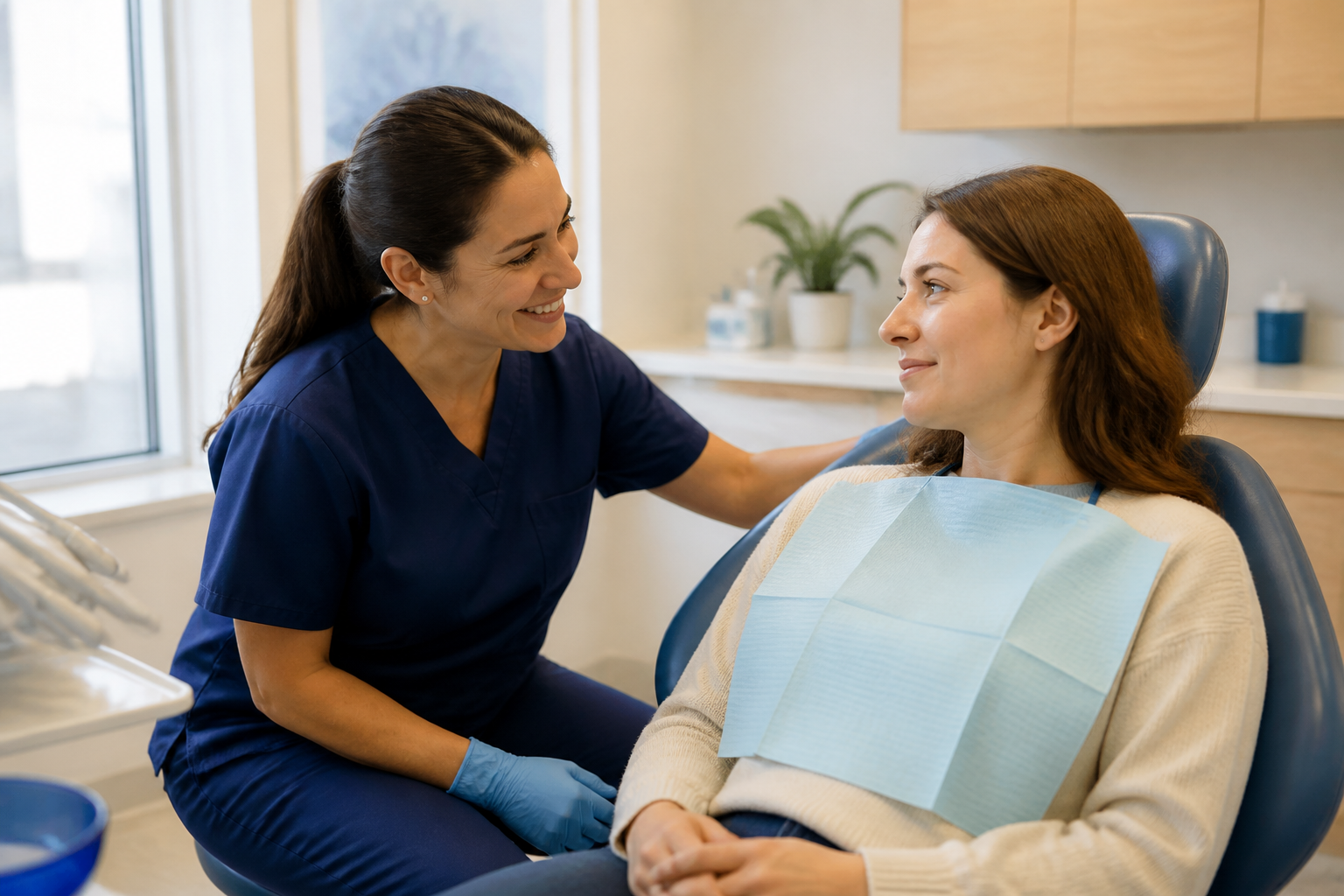
We don’t have a script for nervous patients. What we do instead is adapt to the person in front of us.
We explain before we start. Surprises are a significant source of anxiety in the dental chair. We walk through what we’re about to do, in plain language, before we do it — so nothing comes out of nowhere.
We use a stop signal. Before treatment begins, we agree on a signal — usually raising your hand — that means “stop immediately, I need a moment.” No questions, no hesitation. We pause. You stay in control. Knowing you can stop at any time changes the dynamic significantly.
We go at your pace. If completing a check-up takes two shorter appointments instead of one long one, that’s fine. If you’d like to sit in the chair for a few minutes before we start just to get comfortable, we can do that. There’s no pressure to move faster than you’re ready for.
We don’t lecture. If you haven’t been to the dentist in five years, or ten, we’re not interested in making you feel bad about that. What matters is that you’re here now. We’d rather understand where things are at and work out a plan to move forward than spend any time on what should have happened.
We listen. If you tell us you’re nervous, that information shapes how we approach the appointment. Reception passes it on to the treating dentist before you even sit down.
Practical things that can help
Beyond how we work, there are some things you can do that many nervous patients find useful:
Tell us when you book. If you mention at booking that you’re anxious, we can allow extra time in the appointment. Feeling rushed makes anxiety worse. A longer appointment means things can unfold at a more comfortable pace.
Bring headphones. Listening to music, a podcast, or an audiobook can significantly reduce the experience of being in the chair. You might not catch every word, but having something familiar in your ears can be grounding.
Consider a morning appointment. Many people find that a morning appointment reduces the buildup of dread. If your appointment is at 6pm, you have the whole day to think about it. A 10am appointment doesn’t leave as much time for the anticipation to build.
Bring someone with you. Having a support person in the practice — even just in the waiting room — can be reassuring. They can come in during the appointment too, if that helps.
Give yourself something to look forward to afterward. It sounds simple, but planning something enjoyable after the appointment can shift the mental framing. The dentist visit becomes a thing you’re getting through, not an endpoint.
Evening appointments for Mawson Lakes patients
One thing we hear from nervous patients who work full-time is that daytime appointments add another layer of stress — leaving work, trying not to think about it all morning, rushing back. We’re open Monday to Thursday until 7pm, so you can book after work and have a more normal day before coming in. For some people, this makes a meaningful difference.
A note on gaps in treatment
If you haven’t been to the dentist in a while — whether it’s two years or ten — the most important thing is that you’re thinking about coming back. Putting it off longer rarely makes it easier, and dental problems don’t tend to resolve themselves.
When you come in after a gap, we take a thorough look at what’s there, explain what we’re seeing, and help you prioritise. Some things are genuinely urgent. Others can wait. A phased treatment plan — tackling the most important things first and spreading appointments over time — is often the most manageable approach, and we’re completely comfortable working that way.
You can read more about our team at Smile Spot and what you can expect at your first dental check-up. If you’d like to talk through any concerns before booking, you’re welcome to get in touch first.
If you’re ready to take the step, book an appointment online or call us on (08) 8258 0650. We’re open Monday to Thursday until 7pm. There’s no judgement here — just a team that will work with you at your pace.