“Every six months.” You’ve heard it from every dentist, every toothpaste ad, probably your parents. It’s one of those health recommendations that feels like it’s been around forever — because it has. But is it actually the right frequency for everyone?
The honest answer: it depends. Here’s what actually determines how often you should be seen, and why the blanket six-month rule isn’t quite as universal as it sounds.
Where the “every six months” rule comes from
The origin is murkier than you’d expect. There’s no single landmark study that established six months as the ideal interval. The recommendation became widespread in the mid-20th century, partly through public health campaigns and partly through dental insurance structures that covered two visits per year.
That doesn’t mean it’s wrong — for many people, six-monthly visits work well. It’s a reasonable default. But it’s a guideline, not a biological law. Your mouth doesn’t set a timer at exactly 182.5 days.
Who should come in every six months (or more often)
For the majority of adults with generally healthy teeth and gums, a check-up and clean every six months catches problems early and keeps plaque and tartar under control. This is the group where the standard recommendation works well.
But some people genuinely need to be seen more frequently — every three to four months. This includes:
People with active gum disease. If you’ve been diagnosed with periodontitis, more frequent professional cleans are part of managing the condition and preventing further bone loss. Once gum disease is stabilised, you might move back to six-monthly visits, but that’s a clinical decision, not an automatic one.
Smokers. Smoking significantly increases your risk of gum disease, slows healing, and makes it harder for your body to fight oral infections. More frequent monitoring helps catch deterioration early.
People with diabetes. Diabetes and gum disease have a two-way relationship — each makes the other harder to manage. Tighter monitoring of your oral health is part of good overall diabetes management.
Patients with a history of frequent decay. If you’ve had multiple fillings or cavities in recent years, shorter intervals between check-ups let us catch new decay while it’s still small and manageable.
People undergoing orthodontic treatment. Braces and aligners create additional surfaces where plaque accumulates. More frequent professional cleans help prevent the white spot lesions and decay that can develop during treatment.
Who might be fine with annual visits
Some adults with excellent oral health — no history of decay, healthy gums, good home care habits, non-smokers, no chronic health conditions that affect the mouth — may genuinely be fine with annual visits.
This isn’t something you should decide on your own, though. It’s a conversation to have with your dentist after they’ve assessed your individual risk profile. If your dentist suggests you could safely extend to 12-monthly visits, that’s a compliment to your oral health — take it.
The real cost of skipping visits
The most common pattern we see isn’t people debating between six and twelve months. It’s people who haven’t been in two, three, or five years — often because nothing hurt, so they assumed everything was fine.
The problem is that most dental issues don’t hurt until they’re advanced. A small cavity is painless. Early gum disease is painless. By the time you feel something, the treatment needed is typically larger, more complex, and more expensive than what a routine check-up would have caught.
A check-up and clean is one of the least expensive dental appointments you’ll have. It’s the skipped ones that end up being costly.
What a check-up actually involves
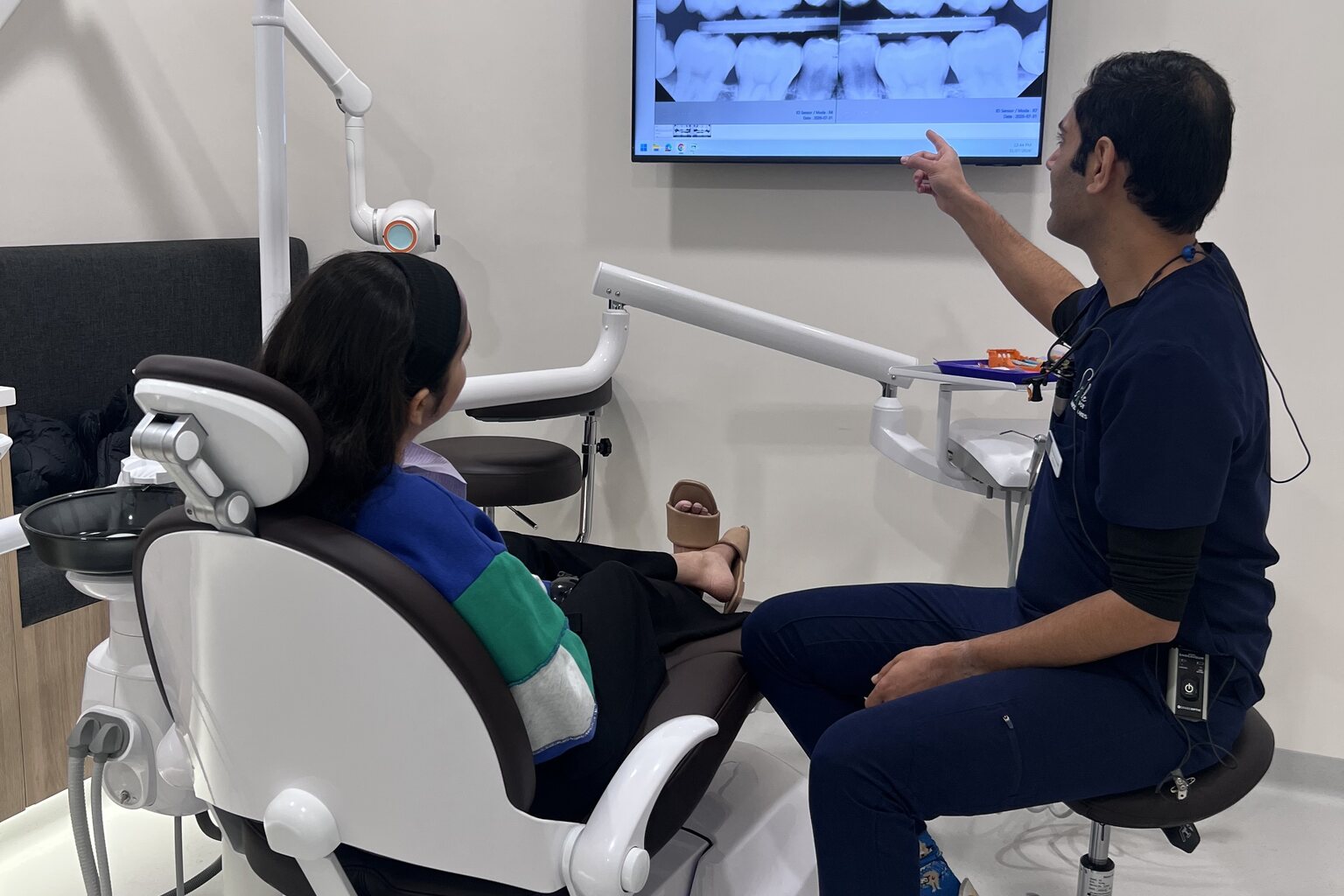
At Smile Spot Mawson Lakes, a standard check-up includes a thorough examination of your teeth, gums, and soft tissues, digital X-rays as needed (not necessarily every visit), a professional clean to remove plaque and tartar, and a conversation about anything we’ve found and what, if anything, needs attention.
It’s straightforward, usually takes around 45 minutes, and for patients with health fund cover, the out-of-pocket cost is often minimal or zero. We’re a Bupa Members First Platinum provider and a preferred provider for NIB, CBHS, and smile.com.au — meaning reduced or no gap for eligible services. We also accept all other major health funds, including HCF, with claims processed on the spot through HICAPS.
So what’s the right answer?
Talk to your dentist. The right interval for you depends on your individual risk factors — your gum health, decay history, medical conditions, medications, and home care habits. A good dentist will tell you honestly whether you need to be seen every three months or whether once a year is genuinely sufficient.
If you’re unsure where you stand, or if it’s been a while since your last visit, come in for a check-up and we’ll give you a straight answer.
We see patients from across Mawson Lakes, Parafield Gardens, Salisbury, Paralowie, Ingle Farm, Golden Grove, and Para Hills. Evening appointments are available Monday to Thursday until 7pm.
Book online or call us on (08) 8258 0650.
Smile Spot Mawson Lakes — 1/3 Coventry Street, Mawson Lakes SA 5095.