
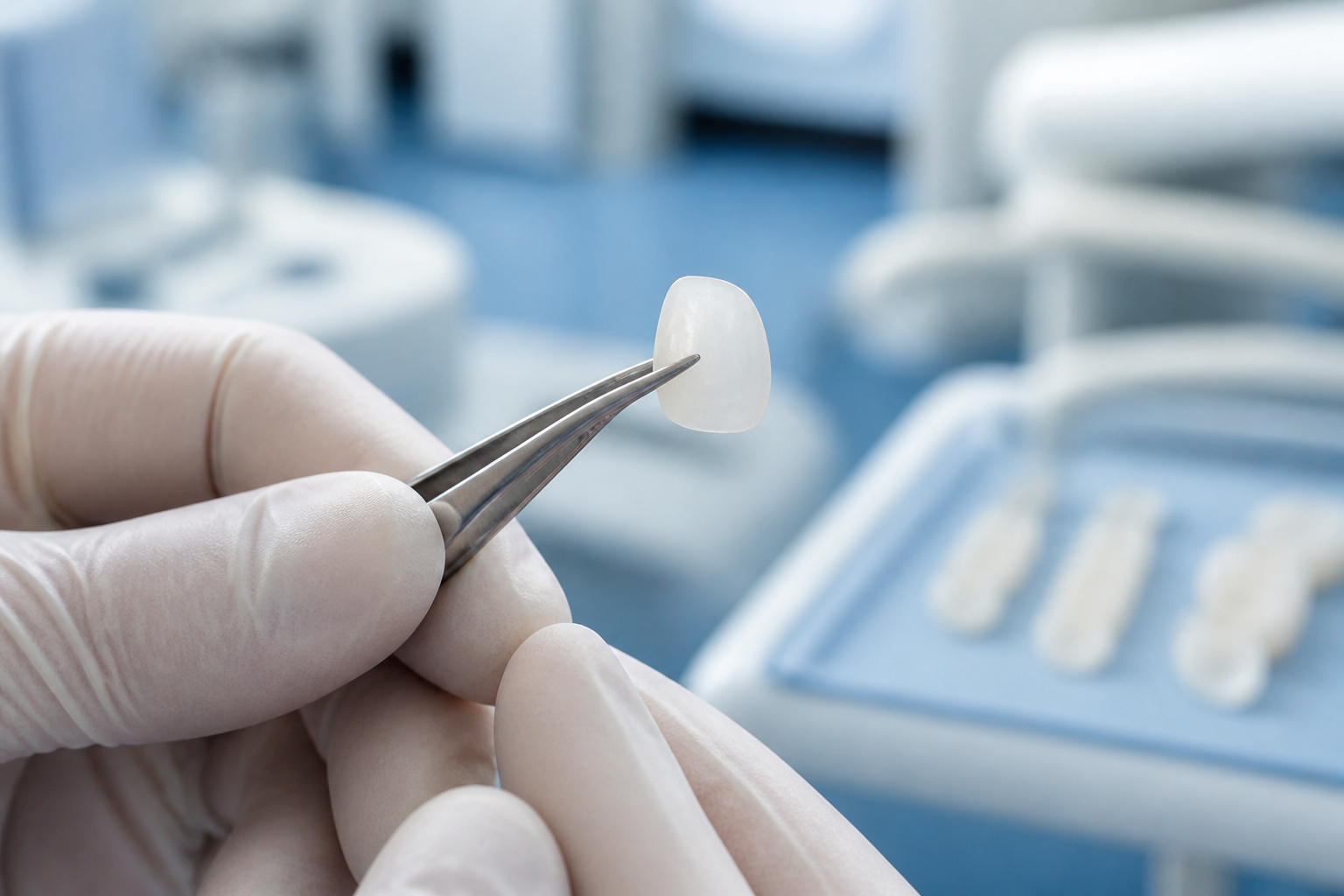
Dental veneers are thin shells bonded to the front surface of teeth to improve their appearance. Both porcelain and composite options can produce a significant cosmetic result — but they’re different materials, different processes, and different investments. The right choice depends on your teeth, your goals, your timeline, and your budget. This post walks through the honest comparison so you can have an informed conversation at your next appointment.
At Smile Spot Mawson Lakes, we offer both options through our cosmetic dentistry services. Dr Louise Chen consults in Mandarin for patients who prefer to discuss treatment in that language.
What are dental veneers?
A veneer is a thin shell — roughly 0.5 to 1mm thick for porcelain, and similar for composite — that is bonded to the front face of a tooth. Veneers are used to address:
- Chipped or cracked teeth
- Gaps between teeth
- Discolouration that hasn’t responded to whitening (including internal staining from medication or injury)
- Worn-down teeth
- Uneven shapes or sizes
They’re not a structural fix for damaged teeth — that’s what crowns and fillings do. Veneers are specifically a cosmetic improvement to the visible front surface.
Porcelain veneers
Porcelain veneers are fabricated at a dental laboratory from a high-quality ceramic material. The process typically takes two appointments.
At the first appointment, your dentist prepares the tooth surface by removing a small amount of enamel — usually around 0.5mm. This is necessary to create space for the veneer so the finished tooth doesn’t look bulky. Impressions or digital scans are taken and sent to the laboratory, and a temporary veneer is placed while the permanent one is being made (usually one to two weeks).
At the second appointment, the temporary is removed, the porcelain veneer is checked for fit and colour, and it’s bonded permanently to the tooth.
What porcelain does well:
- Highly stain-resistant — coffee, tea, and red wine have far less effect on porcelain than on natural enamel or composite resin
- Natural translucency that closely mimics real tooth structure, allowing light to pass through in a similar way
- Long lifespan — porcelain veneers typically last 10 to 15 years with good care, and some last considerably longer
- Colour remains stable over time
What to keep in mind:
- The enamel removal is permanent — once prepared for a porcelain veneer, that tooth will always need a veneer or other restoration
- Higher cost than composite
- Two appointments required, with a week or more between them
- Cannot be repaired chairside if they chip — a chipped porcelain veneer generally needs to be replaced
Composite veneers
Composite veneers are made from the same tooth-coloured resin material used for white fillings. Unlike porcelain, they’re applied directly to the tooth by the dentist — sculpted and shaped during a single appointment. This is why they’re sometimes called “direct veneers.”
What composite does well:
- Single appointment — walk in with the concern, walk out with the result
- Minimal to no tooth preparation required in many cases — because no laboratory fabrication is needed and the composite can be applied to the existing tooth surface, some cases require no enamel removal at all, which means the process can theoretically be reversible
- More affordable than porcelain
- Repairable chairside — if a composite veneer chips, it can often be repaired in one appointment rather than replaced entirely
- Well-suited for younger patients whose teeth are still developing, where preserving enamel is a priority
What to keep in mind:
- Shorter lifespan than porcelain — composite veneers typically last 5 to 7 years before they need refreshing or replacement, depending on habits and care
- More susceptible to staining over time, particularly from coffee, tea, and red wine
- The surface can become slightly duller over time as the material wears
- Colour stability is lower than porcelain
Who is a good candidate for veneers?
Veneers work well when the underlying teeth are structurally sound and the main concern is appearance. Common candidates include:
- Someone with a chipped front tooth that’s cosmetically noticeable but otherwise intact
- Teeth with staining that whitening hasn’t resolved — particularly fluorosis, tetracycline staining, or discolouration from a previous root canal
- A small gap between front teeth (a diastema) that the patient wants closed without orthodontics
- Worn or uneven edges from grinding
Cases where veneers may not be the right starting point:
If you grind or clench your teeth significantly (bruxism), veneers — both porcelain and composite — are at higher risk of chipping or debonding. In these situations, addressing the grinding with a nightguard first, or considering other options, is usually the better approach.
If your enamel is insufficient — due to erosion, previous dental work, or developmental factors — there may not be enough tooth surface to reliably bond a veneer to.
If your teeth are significantly misaligned or crowded, Invisalign or another orthodontic option might produce a better long-term result than veneers alone, or might be recommended first to reduce the number of veneers needed.
A consultation is the right way to work out which option suits your specific situation.
Maintenance
Caring for veneers isn’t complicated. Normal brushing with a soft-bristled toothbrush, flossing, and keeping up with regular dental check-ups and cleans is the foundation. A few practical notes:
- Avoid biting hard objects with veneered teeth — bottle tops, ice, and hard sweets can chip both porcelain and composite
- If you grind at night, a nightguard can protect veneers from wear
- Porcelain is stain-resistant but not stain-proof — and the bonding margins where the veneer meets the tooth can discolour over time. Regular professional cleaning helps maintain appearance
- Composite stains more readily, so patients who drink significant amounts of coffee or tea may find the colour shifts over time
Costs and payment options
Veneer costs vary depending on the material, the number of teeth being treated, and the complexity of each case. We’d prefer not to give you a figure here that turns out not to match your specific situation — a consultation is the right place to discuss costs accurately.
What we can say is that composite veneers are generally more affordable than porcelain on a per-tooth basis, and that DentiCare payment plans are available at Smile Spot Mawson Lakes, allowing you to spread the cost of treatment over time. We’ll go through the numbers with you clearly before any treatment proceeds.
Next steps
If you’re in Mawson Lakes, Para Hills, Salisbury, Parafield Gardens, or nearby, and you’ve been thinking about improving the appearance of your smile, a consultation is the straightforward first step. We’ll look at your teeth, discuss what’s bothering you about them, and give you an honest recommendation on whether veneers are appropriate and which type suits your situation.
To book a consultation, make an appointment online or call us on (08) 8258 0650. We’re open Monday to Thursday until 7pm.
Any surgical or invasive procedure carries risks. Before proceeding with treatment, you should seek a second opinion from an appropriately qualified health practitioner. Individual results may vary.